
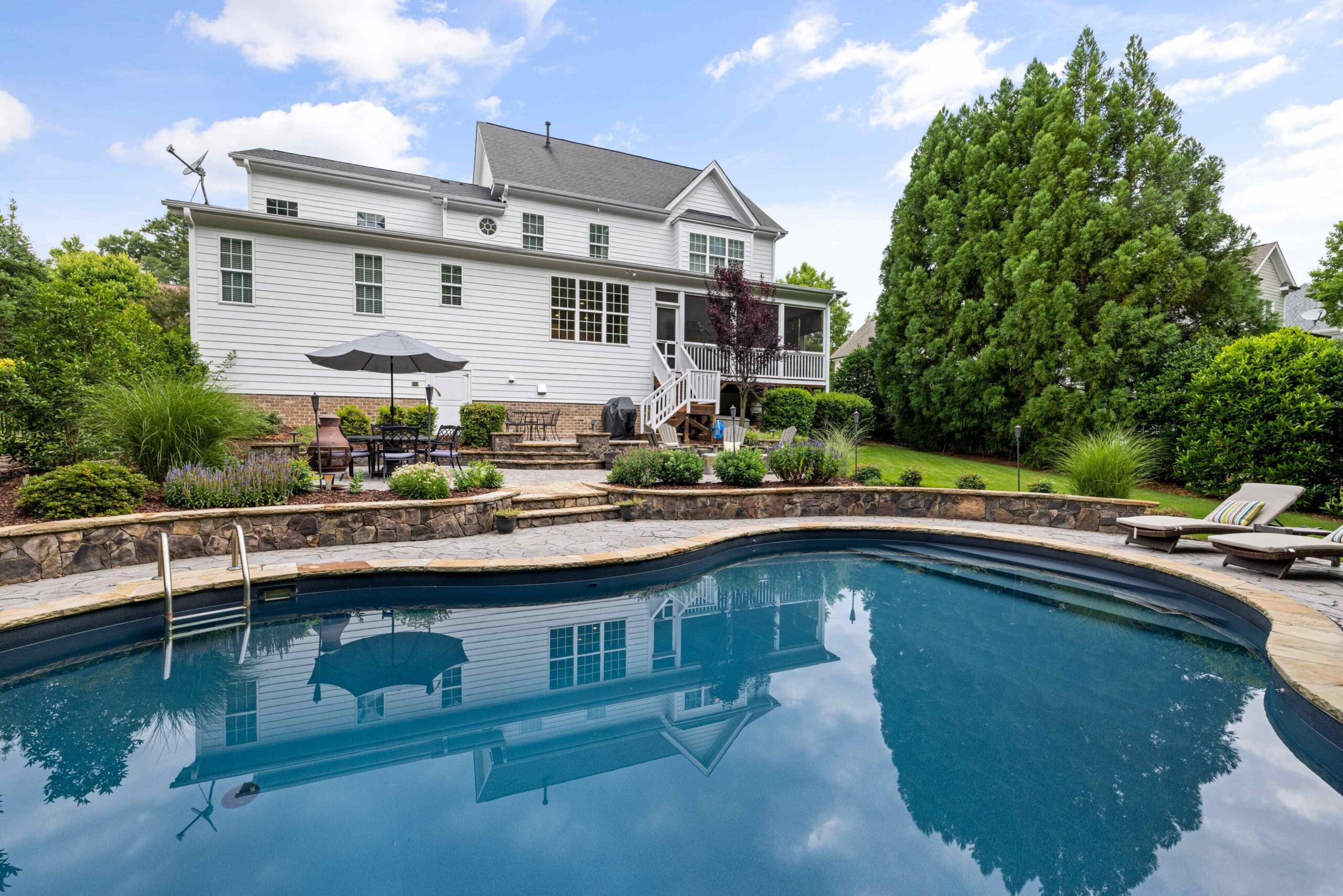
Walk through almost any established neighborhood with a healthy share of backyard pools and you will notice a strange pattern. The homes look great. Fresh paint, updated kitchens, new landscaping. Then you peek over the fence and see a pool that looks like it belongs to a different decade entirely: chalky plaster, faded coping, a diving board nobody has trusted since the second Obama term.
It is not neglect, exactly. It is that pools age on a completely different clock than the houses they belong to, and most homeowners never got the memo. That gap is exactly why swimming pool renovation has quietly become one of the most requested outdoor projects in the home improvement world. Owners are realizing that the pool is often the oldest looking thing on the property, and that fixing it changes how the entire backyard feels.
Why Pools Wear Out on a Faster Clock
A house spends its life protected. It has a roof, insulation, climate control, and paint that gets refreshed every so often. A pool has none of that. It sits outside every single day holding thousands of gallons of chemically treated water under direct sun.
That combination is brutal. Chlorine and other sanitizers slowly eat away at plaster and grout. UV exposure fades interior finishes and breaks down vinyl and plastic components. Water itself is constantly seeking a way out, testing every seam, skimmer, and light fixture. Meanwhile, the ground beneath the pool shifts subtly over the years, which is how hairline cracks and uneven decks are born.
Interior pool finishes generally have a shorter lifespan than most major home systems, and equipment like pumps and heaters typically needs replacement even sooner. Compare that to a roof or an HVAC system, and the math becomes obvious: a pool can go through two or three aging cycles in the time a house goes through one.
The Warning Signs Homeowners Learn to Ignore
Part of the problem is that pool decline is gradual, and people are remarkably good at adjusting to gradual. The rough patch on the steps that scrapes your feet becomes “just how the pool is.” The light that stopped working becomes a permanent quirk. The water bill creeps up, and nobody connects it to a slow leak.
The classic signals are worth naming, because most owners have at least one:
- Stains and discoloration that no amount of brushing or chemistry fixes
- Rough or flaking surfaces on the pool interior, especially on steps and floors
- Cracked or lifting coping and tile around the waterline
- Outdated equipment that runs loud, runs constantly, or drives up energy costs
- A look that simply dates the backyard, from decades-old tile patterns to worn decking
None of these usually means the pool is beyond saving. They mean it has reached the stage of life where cosmetic touch-ups stop working and a real renovation starts making sense.
Renovate or Rip It Out? The Question More Owners Are Asking
For a while, the trend headlines suggested that tired pools were simply being filled in. And yes, some owners go that route. But demolition is expensive, it can complicate a future sale in neighborhoods where buyers expect a pool, and it permanently removes something that took serious money to build in the first place.
Renovation has become the more compelling middle path. The structure of a properly built pool, the shell itself, is typically the longest lasting part of the whole system. What fails is everything attached to it: the finish, the tile, the plumbing fittings, the equipment. Renovating means keeping the expensive part you already own and replacing the parts that were always designed to wear out.
That reframing matters. Owners stop seeing an old pool as a liability to be removed and start seeing it as a foundation that is already bought and paid for.
What a Modern Renovation Actually Looks Like
The word “renovation” undersells what happens to these projects today. This is not just a fresh coat of plaster. A full pool remodel can include new interior finishes in modern materials, updated waterline tile, resurfaced or fully redesigned decking, new coping, and energy efficient equipment that runs quieter and cheaper than what it replaces.
Owners are also using renovation as a chance to bring older pools up to current expectations. That can mean adding LED lighting, tanning ledges, water features, automation that controls everything from a phone, and safety upgrades that were not standard when the pool was originally built. Some projects even reshape the pool itself, softening dated geometric designs into something that fits how the family actually uses the space now.
The result is that a renovated pool rarely looks “repaired.” Done well, it looks like a brand new pool that happens to sit exactly where the old one did.
The Lifestyle Dividend
Here is the part that surprises people most. Owners who renovate consistently describe the same shift: they start using the pool again. The backyard stops being a maintenance chore they avoid and becomes the place where weekends actually happen. Kids swim more. Friends come over more. The house effectively gains an outdoor room.
There is a financial angle too. A crumbling pool can drag on a home’s appeal, while a fresh, modern one becomes a selling point. But most owners are not renovating for a future buyer. They are renovating because they looked at the most neglected asset on their property and realized it was also the one with the most potential.
Giving the Backyard Its Second Act
The pool aging problem is real, but it is also solvable, and solving it costs a fraction of what the pool cost to build. If your home looks a decade younger than the water behind it, that gap is not permanent. It is just waiting for its turn on the renovation list. Judging by how many homeowners are moving it to the top, the backyard’s second act is already underway.
