
Key Takeaways
- Cut storage waste by treating corrugated cardboard as a space tool, not just shipping packaging; flat sheets, knocked-down boxes, and the right roll size can free shelves fast in a 100-order month operation.
- Match corrugated cardboard format to the item: boxes for mixed or fragile orders, flat inserts for stiffening mailers, and single-face wrap for edge protection without piling on extra paper, foam, or plastic fill.
- Check flute, wall, and thickness before buying; a single wall corrugated sheet often handles everyday shipments, while double wall stock makes more sense for heavy, dense, or crush-prone products.
- Run a five-package test before placing a larger corrugated cardboard order; measuring real products against five repeat shipment types usually shows which box and mailer sizes deserve shelf space.
- Reduce dead stock by buying corrugated cardboard around order patterns, not guesswork; too many low-use box sizes tie up cash, crowd the backroom, and slow packing.Use right-size corrugated packaging to lower filler use and keep recycling simpler; customers notice a box or mailer that fits cleanly and doesn’t arrive stuffed with loose material.
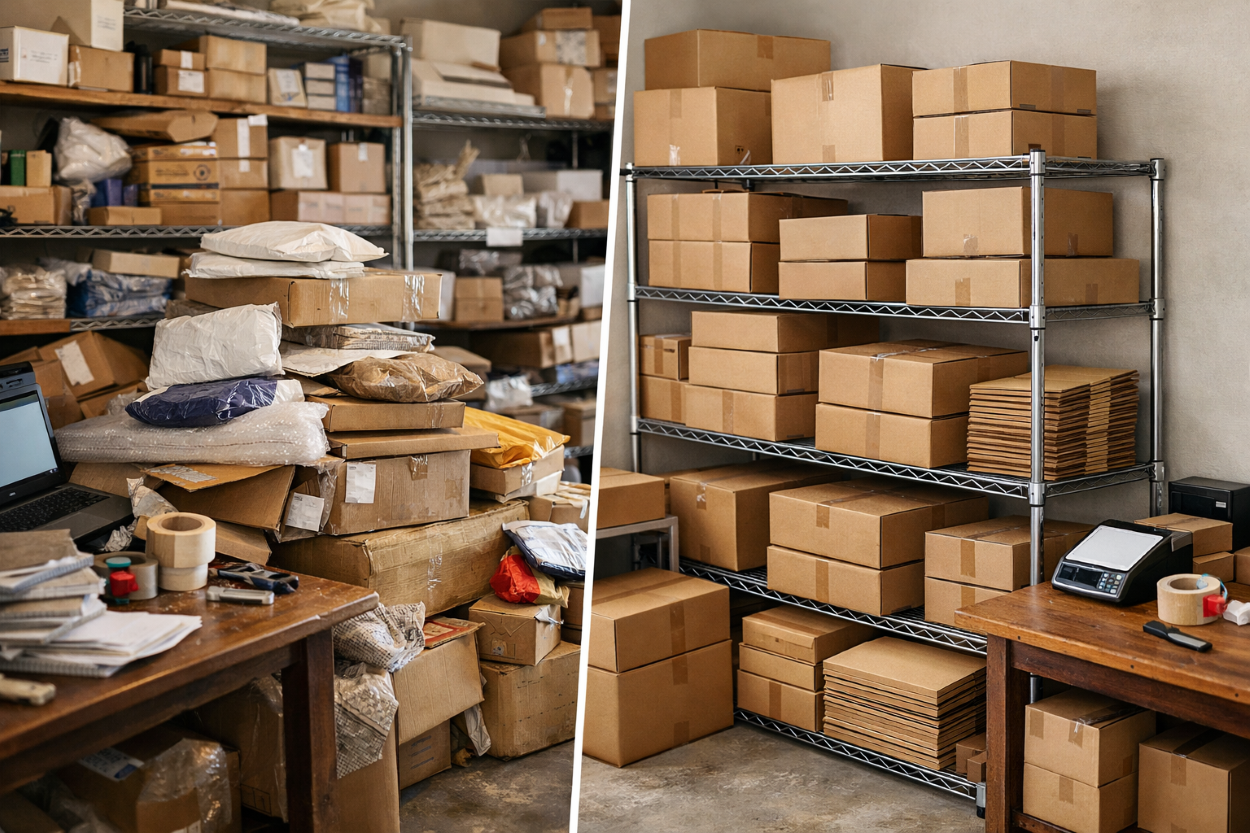
One extra shelf of boxes can quietly eat the profit from 100 orders a month. That’s the math small shippers run into once spare-bedroom fulfillment turns into stacked bundles, half-used mailers, and filler supplies shoved under tables. Corrugated cardboard usually gets treated like a basic supply item, but the wrong mix of box sizes, sheet stock, and roll material can turn a tight packing area into a daily bottleneck.
For businesses at this volume, space pressure isn’t just annoying—it slows packing, hides dead stock, — pushes repeat purchases of sizes they already own. In practice, the honest answer is that storage problems often start with packaging choices, not warehouse size. A calm reset helps: know what counts as corrugated, know when a flat mailer beats a box, and know when thicker wall construction earns its footprint. Get that right—and a cramped backroom starts working a lot harder.Corrugated cardboard basics small shippers need to know before buying
A shop shipping 100 orders a month often hits the same wall fast: too many package types, not enough shelf space, and rising damage claims. One week they buy a mailer that bends; the next, a cardboard box that costs more to ship than the item inside.That’s where corrugated cardboard starts to matter.
In shipping packaging, it means paperboard built with a fluted middle layer between flat liner sheets, not plain paperboard or cardstock. For small shippers, corrugated boxes usually earn their space because they stack well, stay light, — give better crush resistance than a flat sheet alone.What counts as corrugated cardboard in shipping packaging
Count it as corrugated if the material has a visible wave, or flute, between liners. That structure shows up in corrugated cardboard shipping boxes, pads, inserts, rolls, and some mailers made from kraft paper with a single face or full wall build.Corrugated cardboard vs regular cardboard for boxes, sheets, and mailers
Regular cardboard is usually a solid paper sheet. Corrugated adds air space and thickness—so a 10×10 cardboard box or a 12 x 12 x 12 cardboard box can protect better without heavy foam or extra wrap. That matters for corrugated cardboard box pricing, since stronger structure can cut void fill and returns.How to spot flute, wall, thickness, and face on a corrugated cardboard sheet
- Flute: the wavy paper inside
- Face: the flat outer sheet
- Single wall: one flute layer
- Double wall: two flute layers for heavy duty loads
Need a quick check? A box strength guide should match item weight, not guesswork. Corrugated box sizes should fit close to the product—an inch or two of clearance is often enough.Why corrugated cardboard takes over limited backroom and garage space
Think of it like shelf math over coffee: smart sellers don’t run out of room because they ship 100 orders a month, they run out of room because packaging takes over. With corrugated cardboard, the win is simple—flat packs store tighter, stack cleaner, and cut dead space that soft mail supplies and odd retail packs often leave behind.Flat corrugated sheets, roll stock, and knocked-down boxes compared by storage footprint
Flat sheets are the leanest option for pads, dividers, or sleeve inserts; roll stock works for wrap and edge strips; knocked-down corrugated boxes give the fastest pack line setup. A stack of 25 folded cartons can sit in the footprint of one built box, and a cardboard box stored flat beats loose foam or bulky molded pulp every time.Single wall vs double wall corrugated cardboard for stock that fits tighter shelves
Single wall is usually the better fit for lighter orders — tighter shelves, while double wall earns its keep for dense items that would crush a thin sheet.How right-size packaging cuts wasted paper, foam, and plastic fill
Right-sizing fixes two problems at once—storage pressure and filler waste. Keeping three to five practical Corrugated box sizes, such as a 10×10 cardboard box and a 12 x 12 x 12 cardboard box, usually covers the bulk of small-shop orders while reducing extra paper, plastic, and foam fill. For budget planning, this piece on corrugated cardboard box pricing shows why paying for the right wall and fit works better than paying to ship air.
- Flat sheets: best for pads and stiffeners
- Roll stock: best for wrap and surface protection
- Knocked-down boxes: best for repeat-order packing
Can corrugated cardboard lower storage pressure at 100 orders a month?Yes.At 100 orders a month, storage gets tight fast. The answer is also yes—corrugated cardboard can ease that pressure, but only if the business trims box counts, sticks to useful Corrugated box sizes, and stops buying paper stock that sits flat on a shelf for months.A simple space math example using 100 monthly orders and five box sizes
A shop shipping 100 orders monthly usually doesn’t need 20 sizes of corrugated boxes. Five useful sizes often cover 80 to 90 orders: a mailer, a small cardboard box, a medium cube, a flat sheet packer, and one larger case such as a 12 x 12 x 12 cardboard box. Add one special size like a 10×10 cardboard box only if order data proves it earns its shelf space.
- 5 sizes x 25 units each = 125 units on hand
- 12 sizes x 25 units each = 300 units on hand
- That gap is what creates dead stock, not shipping demand
When mailers beat boxes for apparel, books, prints, and other flat products
For apparel, prints, thin books, and flat paper goods, corrugated cardboard shipping boxes aren’t always the best use of space. Flat mailers or single-wall wraps store in tight stacks—often where foam, plastic sleeve packs, or extra rolls of kraft wrap would otherwise crowd the station.Where overbuying corrugated cardboard creates dead stock and cash drag
Here’s what most people miss: corrugated cardboard box pricing looks better at higher case counts, but overbuying turns cheap units into costly inventory. A quick box strength guide check also helps avoid buying double-wall packs for light items that only need standard kraft packaging.Sounds minor. It isn’t.Picking the right corrugated cardboard formats for real shipping jobs
Which format actually fits the order mix going out every day? The honest answer is simple: pick by product risk, dead space, and packing speed—not by habit.Corrugated cardboard boxes for heavy duty, fragile, and mixed-item orders
For dense or breakable goods, corrugated boxes beat thin paper mailers because the fluted wall adds crush resistance. A single cardboard box can work for candles, mugs, or bundled orders, but corrugated cardboard shipping boxes make more sense once weight climbs past about 8 to 10 pounds or mixed-item orders need foam, wrap, and void fill.Most small shippers need a quick box strength guide: 32 ECT fits everyday orders, while double wall is better for heavy duty loads and fragile glass sets. Buying by Corrugated box sizes cuts filler use, keeps items from shifting, and lowers wasted cube.Corrugated cardboard sheets as pads, sleeve stiffeners, dividers, and flat inserts
Flat corrugated cardboard sheets do more than fill space. They work as pads under jars, sleeve stiffeners inside poly mailers, dividers for mixed SKUs, and inserts for prints or cardstock pieces that can’t bend.Corrugated cardboard roll options for wrap, edge strips, and surface protection
A corrugated cardboard roll is useful for odd shapes—frames, metal parts, molded items, even butcher-block samples. It can be cut into edge strips, palm-size guards, or surface wrap where plastic film alone won’t stop scuffs.Not complicated — just easy to overlook.White, kraft, black, and printed finishes: what changes and what doesn’t
Finish changes appearance, not core performance. White and black can suit presentation, kraft keeps a plain recyclable look, and printed sheets help packing teams sort fast (helpful in a 100-order month). Watch fit and cost: a 10×10 cardboard box may beat a large one with extra paper, while a 12 x 12 x 12 cardboard box can trigger avoidable dimensional charges. Realistically, corrugated cardboard box pricing matters less than choosing the right size and thickness for the job.A practical corrugated cardboard buying plan for growing e-commerce operations
Storage pressure usually comes from buying the wrong mix, not too little space.
- Run a five-package test. Pack five real orders using current materials, measure void fill, damage risk, and final billable size. This is where sellers spot whether corrugated boxes are oversized or whether a mailer and flat sheet insert would work better.
- Build a short size ladder. Most shops shipping 100 orders monthly can work from three to five Corrugated box sizes, not ten. A 10×10 cardboard box fits small folded goods and light wrap needs; a 12 x 12 x 12 cardboard box often covers medium orders with kraft paper or molded pulp.
- Check strength before price. A cheap cardboard box that crushes costs more after one damaged order. Use a plain box strength guide: light items in single-wall, denser or fragile goods in double wall.
The five-package test to set sizes before placing a larger packaging order
For growing stores, the smart move is to compare five packed samples side by side—same item, different box, mailer, or single-face corrugated cardboard wrap. In practice, this shows which corrugated cardboard shipping boxes hold shape without excess foam, paper, or plastic fill.Reorder timing, sheet counts, and roll usage without crowding storage space
Reorder at roughly 30 days of use left, not when cartons are nearly gone. Keep one pack of flat sheets, one roll for odd shapes, and no more than 45 days of core stock if storage is tight.Recyclable corrugated cardboard and molded pulp choices customers actually notice
Buyers do notice right-sized packs, clean kraft texture, and easy-to-recycle materials. They rarely notice tiny shifts in corrugated cardboard box pricing, but they do notice waste, crushed corners, and oversized boxes.It’s a small distinction with a big impact.
Frequently Asked Questions
What’s the difference between corrugated cardboard and regular cardboard?
Corrugated cardboard has a fluted inner layer sandwiched between flat paper liners, which gives it more strength and cushioning. Regular cardboard is usually a single solid paperboard sheet, so it’s thinner and better for folding cartons, not shipping heavier items. For e-commerce, that fluted wall is what helps protect products in transit.
What counts as corrugated cardboard?
If the material has at least one wavy fluted medium attached to one or more flat linerboard sheets, it counts as corrugated cardboard. That includes single-wall boxes, double-wall cartons, single-face rolls, flat pads, inserts, and heavy duty shipping sheets. If it’s just smooth paperboard with no flute pattern, it isn’t corrugated.
How can someone tell if cardboard is corrugated?
Look at the edge. If there’s a visible wave or ribbed texture between flat paper layers, it’s corrugated cardboard.
What is the purpose of corrugated cardboard?
Protection. That’s the honest answer. Corrugated cardboard absorbs impact, adds stacking strength, fills empty space, and helps keep products from getting crushed during storage and shipping.
Is corrugated cardboard recyclable?
Yes, in most curbside recycling programs, corrugated cardboard is accepted because it’s paper-based and widely recycled. Clean kraft or white corrugated sheets and boxes are usually fine, — greasy, soaked, or food-stained material can be rejected. Tape, plastic wrap, foam, and labels should be removed if local rules ask for it.No shortcuts here — this step actually counts.
What are the main types of corrugated cardboard?
The main types are single-face, single-wall, double-wall, and triple-wall. Single-face comes in rolls or sheets and works well as wrap or padding, while single-wall is the standard shipping box material. Double-wall and triple-wall are thicker and used for heavier products, longer shipping cycles, or stacked pallet loads.
When should a small shipper use double-wall instead of single-wall?Use double-wall corrugated cardboard for dense, fragile, or high-value items, especially if the packed weight starts pushing past what a standard carton handles comfortably. It’s also a smart move for glass, metal parts, bundled books, and anything that may sit under other boxes in transit. Paying a bit more for board strength is cheaper than replacing damaged orders.
Are corrugated cardboard rolls good for shipping?
Yes, but not as a full box replacement. Corrugated rolls and single-face paper wrap are best for wrapping products, making edge protectors, lining cartons, or adding a cushion layer around odd shapes. They work well with kraft paper, molded pulp, or other fill, but they don’t replace a proper outer box for most parcel shipments.
What thickness or flute size should sellers look for?
For most online orders, sellers don’t need to obsess over exact flute charts, — they should know the basics: smaller flutes give a smoother face and tighter folds, while larger flutes add cushioning. E-commerce boxes often use common profiles like B or C flute in single-wall board. If a product is heavy, sharp-edged, or breakable, board grade matters more than color, texture, or whether the outside is brown, white, or black.
Can corrugated cardboard be used inside mailers and not just boxes?
Absolutely. Flat corrugated sheets are useful as stiffeners inside paper mailers, book wraps, and poly sleeves when a seller needs extra bend resistance without adding much weight. In practice, they’re one of the cheapest fixes for prints, photos, thin apparel stacks, and other items that get creased fast.
For a business shipping around 100 orders a month, storage pressure usually isn’t caused by one bad box choice. It’s caused by small packaging habits that stack up fast—too many sizes on the shelf, too much void fill on hand, and cases of packaging that looked smart to buy but sit untouched for months. Corrugated cardboard helps fix that problem because it stores flat, covers more than one job, and makes right-size packing easier without turning a backroom or garage into a packing warehouse.
That’s the real shift. A tighter box lineup, more use of mailers for flat goods, and a simple test before placing a bigger order can free up shelf space and cut waste at the same time. Even sheet stock and roll formats can pull extra duty as pads, dividers, stiffeners, and surface guards (which means fewer separate materials to stock).
The next move should be practical: pull the last 30 days of orders, group them into five package types, and map each one to a corrugated cardboard format before the next supply order is placed. That one review can show exactly what deserves shelf space—and what doesn’t.For more great reading, visit our site and explore related topics.
