
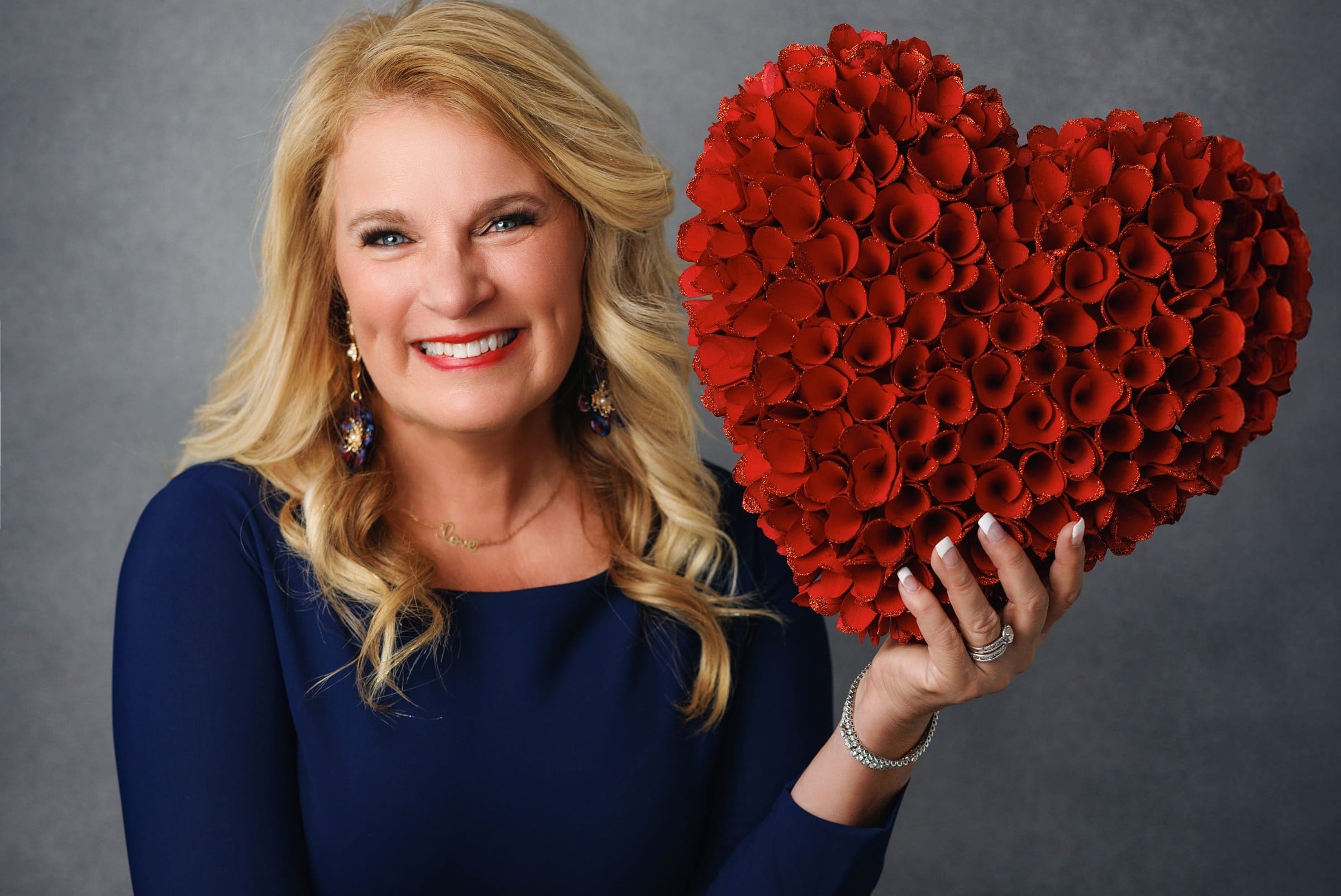
Michelle Hays sits across from her husband at breakfast, watching him cook bacon in the oven. It’s a simple moment, but one that represents something much larger in their relationship. Years ago, a scene like this might have triggered frustration, disappointment, or resentment. Today, it’s different because they’ve learned something most couples never do: how to navigate love when the feelings fluctuate, and how to recognize the difference between feeling unloved and actually being unloved.
For many couples, the moment love stops feeling effortless marks the beginning of the end. They interpret disconnection as evidence that love has disappeared, when in reality, they simply lack the skills to maintain emotional intimacy through life’s inevitable challenges. Michelle has spent years developing what she calls Love Literacy™ to address this gap, helping couples understand that one of the greatest misunderstandings in marriage isn’t a lack of love—it’s a difference in how two people define it.
The Common Denominator in Failed Marriages
Michelle’s work is informed by a unique combination of lived experience, professional study, and years of helping others navigate relationship challenges. While her own experiences sparked important questions about love, connection, and communication, it was her continued research, education, and work with couples that transformed those questions into a broader mission.
“I got divorced from my first husband, who I loved with all my heart. We had two children. We had an amazing family. I never wanted to break up my family, but I felt unloved and I believed that was true. He shut down, and we didn’t have the skills to create emotional safety, understanding, and connection that we both needed to feel loved,” she explains.
Rather than viewing that chapter as a personal failure, Michelle began examining a larger issue: what if many relationships struggle not because people lack love, but because they lack the skills love requires?
There were times in her life when Michelle looked around and wondered why, if she was loved so much, she simply couldn’t feel it. When similar challenges emerged later in life, she experienced a moment of clarity. During an argument with her husband, Brian, she told him she needed to go for a walk. During that walk she asked herself some tough questions.
“This is my third marriage. I am the common denominator. These were good men. So what is missing from this equation? What don’t I know? What haven’t I learned that keeps leading me back to this same place?”
Those questions changed the trajectory of her life. Instead of focusing on what her partners were doing wrong, Michelle became determined to understand what she had never been taught about love, relationships, and the skills required to sustain them.
This realization became the foundation for her work. Michelle discovered that most couples possess deep love for each other but suffer from a lack of understanding. The story so many people tell themselves is that if their partner truly loved them, they would naturally know how to show it in the exact ways that matter most to them. But the problem isn’t the people or the love itself; it is an educational gap that leaves couples speaking entirely different languages.
Two Different Languages of Love
For a long time, Michelle viewed her relationship strictly through her own lens. She wanted emotional connection, meaningful conversations, words of affirmation, affection, and reassurance. When those things were missing, she assumed something was wrong and found herself feeling disappointed and taken for granted. What she failed to recognize was that her husband, Brian, believed he was loving her every single day.
Brian worked hard to provide for their family. He showed up when she needed him, fixed things around the house, protected their family, planned for the future, and carried responsibilities that she rarely had to think about. In his mind, these weren’t routine obligations. They were expressions of love. He wasn’t withholding love from her; he was giving it in the only way he knew how.
The breakthrough came when Michelle stopped asking why he wasn’t loving her the way she needed, and started asking how he was already loving her that she might not be seeing. That question changed everything. For the first time, she began looking for evidence of love instead of evidence that it was missing. She was looking for words, while he was offering actions. She was looking for emotional reassurance, while he was expressing commitment, loyalty, protection, and provision. Neither of them was wrong, but they had never been taught how to recognize and appreciate the ways the other person communicated.
Learning to Stretch
What made the biggest difference wasn’t just that Michelle began to recognize the ways Brian was loving her, but that Brian became more aware of how she experienced love, too. As they talked more openly about their differences, he began to understand that words of affirmation weren’t simply a preference for her—they were deeply meaningful. A kind word, an expression of appreciation, a compliment, or hearing “I love you” had an impact on her that a completed task or repaired appliance never could.
Once Brian understood that, he made a greater effort to express what he was feeling instead of assuming she already knew. He became more intentional about sharing his appreciation and verbalizing things that previously went unsaid. At the same time, Michelle was learning to recognize the many ways Brian had been expressing love all along. They weren’t trying to change each other into different people; they were learning to understand each other more deeply, creating a bridge where there had once been misunderstanding.
Years ago, Michelle cared for a gentleman named Sidney who was living with Alzheimer’s. One Monday morning, after a visit from his grandchildren, she asked him how their weekend together had gone. His eyes lit up, a smile spread across his face, and he said something she never forgot: “When you love someone, you have to stretch yourself.”
At the time, she thought he was talking about the energy and patience required to keep up with a house full of grandchildren. But over the years, she came to realize that his words apply to every meaningful relationship. Love asks us to stretch beyond our habits, our preferences, and our assumptions. It asks us to see the world through another person’s eyes, extending toward one another in ways that help the other person feel seen, valued, and loved.
Re-Engineering Emotional Safety
To help couples navigate these moments, Michelle teaches them to pause before reacting, to define what they’re truly feeling, and to communicate from a place of seeking understanding rather than assigning blame. She calls this framework the 3D Emotional Reset™, a system that helps couples move from emotional reactivity to intentional response through three specific steps: Define Your Feeling, Delay Your Reaction, and Decide Your Response.
Michelle applied this directly in her own marriage when dealing with old triggers. Early in their relationship, when Brian cooked bacon for breakfast, grease would splatter everywhere. Because of her past, the kitchen mess triggered instant anger. Rather than react, she chose to use her tools, pause, and explain her history. Now, they cook bacon in the oven—a simple accommodation that calmed her nervous system and prevented an unnecessary conflict.
Unlearning these harmful patterns also involves releasing the expectation that love should feel a certain way all the time. Michelle teaches that emotions aren’t instructions. Just because someone feels unloved in a moment doesn’t mean they are unloved. Learning to separate temporary emotional states from actual relationship health is crucial to surviving the natural cycles of marriage.
Dismantling the Silent Epidemic
The statistics tell a sobering story. Approximately half of all first marriages end in divorce. Among second marriages, the failure rate climbs to 67 percent, and third marriages fail at an even higher rate of 73 percent. These numbers reflect a fundamental misunderstanding about the nature of love and marriage. People get remarried thinking it’s going to be different, but it always ends up being the same because they haven’t learned and practiced the skills that love requires.
Michelle sees this pattern repeatedly among couples. One client’s husband regularly gives her the silent treatment during conflicts, sometimes for days at a time. Another couple finds themselves having the same argument over and over, each convinced they are not being heard or understood. These struggles are more common than most people realize. They don’t happen because love disappears, but because couples lack the tools to navigate the inevitable stresses that life brings.
Part of Michelle’s mission involves helping couples develop realistic rather than delusional expectations about marriage. The constant high of early romance cannot last. Real love includes disappointment, disagreement, and disconnection alongside joy, passion, and deep connection. In her own marriage, Michelle and her husband now discuss everything from everyday frustrations to the physical challenges that come with aging, creating safety around vulnerable topics before the distance drives them apart.
The Path Forward
Through her columns, the Monarch for Love Podcast, social media presence, and direct coaching, Hays reaches people at various stages of relationship struggle. She has spent years developing her message, recording over 220 podcast episodes exploring different aspects of love literacy. She writes feature articles that appear on the front page of publications, and she shares marriage tips across social media platforms, personally responding to followers who reach out.
“I’m building something bigger than a coaching practice,” Michelle says. “I’m helping advance a conversation that I believe is long overdue. We have spent generations telling people to communicate better, love harder, and try more. What we haven’t done is teach them the skills that make those things possible. Our partners aren’t failing us. Our understanding of love is,” Michelle emphasizes near the conclusion. Love Literacy™: It’s time we teach it.
One of the greatest gifts we can give our partner is the willingness to learn how they experience love, becoming students of each other. For Hays, the mission is clear: transform how the world understands love by teaching the skills love requires. Through Love Literacy™, she is working to spark a global conversation, helping couples realize that when two people are willing to meet each other where they are, love doesn’t just survive—it deepens.
